How do we know we have mold?
We normally smell it, but it likes to hide.
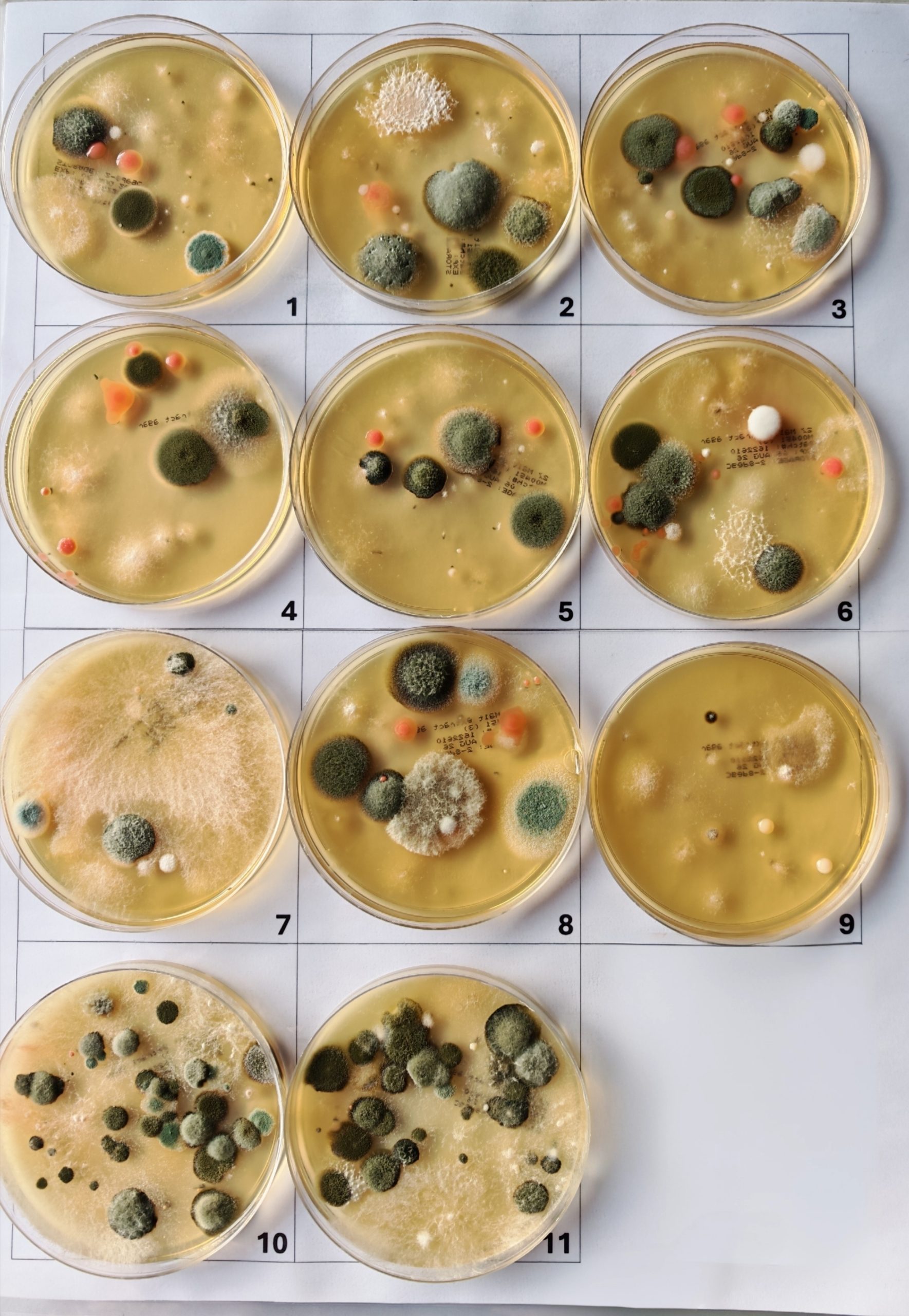
We do air sampling to determine if we have
indoor mold air pollution,
and we will have to do
mold inspection and a damp inspection
to determine if we have mold.
We need to take air or tape samples and send them to a laboratory to establish the
type of the mold.
The only reason we do this is to establish whether it is in an
overabundance
and what health effects the identified type of mold may have on us.


Where does mold live and grow?
Mold is a fungus and mostly lives on organic material, in the soil, on plants, and on dead or decaying matter.
Mold needs food and obtains its food by biologically breaking down organic materials such as leaves, wood and other plant debris. House molds belong to the kingdom Fungi and, unlike plants, they lack chlorophyll. They survive by digesting plant material and other organic matter.
This natural process helps ensure that there is not an overabundance of dead plant matter in the environment. Indoors, however, mold becomes a problem because it grows wherever moisture and organic material are present.
House mold may hide beneath carpets, behind cupboards and wardrobes, inside ceilings and in many other concealed areas. Mold Detection SA assists in finding the mold, identifying the conditions allowing it to grow and determining the correct way to deal with it.

Microscopic small spores polluting the air
Mold survives by producing microscopically tiny spores, just as plants produce seeds. Mold spores are found virtually everywhere and occur naturally in both indoor and outdoor air.
Mold spores are extremely light. Nature has designed them to travel on air currents, allowing them to migrate, settle and grow wherever a suitable combination of moisture and organic material is present.
These tiny spores can settle on indoor and outdoor surfaces. Because individual mold spores cannot be seen with the naked eye, specialised equipment and laboratory analysis may be required to determine whether there is an overabundance of mold spores.
Testing may also establish the type of mold that has entered or developed inside the building and which may contribute to serious
mold health problems
.
Warning!!!
When you see mold growth, you need to be aware that the mold may already have polluted the room or building with thousands of invisible mold spores.
Mold may distribute thousands of microscopically small spores every hour. These spores are effectively the seeds of the mold and are invisible to the naked eye.
Because we cannot see the airborne spores, we often do not know the true severity of the mold problem. Another reason people may underestimate the problem is that only a percentage of occupants may be severely affected by mold exposure.
HEPA filtration may assist in reducing airborne mold spores and other particles, but an air purifier does not remove mold growth or correct the moisture source.
Smell
When you smell it, start worrying and fix it. Your nose is one of the best mold detectors available.
Our saving grace is that we are often able to smell mold. Mold can produce gases and odours that are detected by humans, even where the growth itself is hidden.
However, smell alone cannot tell us how severely the building has been affected or which mold types are present. Invasive investigation is sometimes required to locate concealed mold growth.
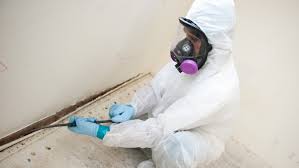
Professional
mold inspectors
have the equipment and experience needed to investigate hidden moisture, assess the building and determine whether further sampling is required.
HEPA air filtration may help reduce airborne particles, but the mold growth and the moisture defect must still be properly addressed.
Mold and moisture
Mold loves moisture and poor ventilation.
When mold spores land on damp organic material, the spores may begin to grow and digest whatever they are growing on in order to survive.
Because mold gradually damages the materials on which it grows, preventing and correcting mold growth can protect building materials, furnishings and personal possessions.
The first requirement is to identify and correct the moisture source. Read more about professional
mold cleanup and remediation
.
Mold contamination and health effects
When moisture problems occur and mold growth develops, building occupants may begin to report mold odours and a variety of health concerns.
Reported concerns may include headaches, breathing difficulties, skin irritation, allergic reactions and aggravation of asthma symptoms. These symptoms may potentially be associated with mold exposure, although they can also have other causes.
All molds have the potential to affect health. Only a percentage of people are significantly affected, while some individuals may be severely affected because of asthma, allergies, mold sensitivity, underlying illness or immune vulnerability.
A professional building assessment can establish whether visible mold growth, hidden moisture, structural dampness or airborne mold-spore overabundance is present. Medical concerns should also be discussed with an appropriately qualified healthcare practitioner.
Read more about
mold and its potential health effects
.
MOLD DETECTION SA
Do you suspect mold, dampness or poor indoor air quality?
Mold Detection SA provides professional mold inspections, damp investigations, indoor air quality assessments, air sampling, tape sampling and detailed remediation recommendations.
Call Mold Detection SA